HEALTH CARE
Recommended Practices in Caring for Alpaca
Sources: Camelid Community Standards of Care Working Group*, the Merck Vet Manual, and general farm experience
PLEASE NOTE: In all cases, please consult with your local vetrinarian to determine the best care for your alpaca.


Getting
Started
Introduction
Getting Started

Daily Care & Environment
Nutrition
Physical Environment
Social Environment
Husbandry

Health &
Wellness
Physical Assessment
Fiber Management
Vaccinations
Emergency Care
Anesthesia
Parasite Management

Reproduction & Development
Breeding
Disease Resistance
Birthing & Newborn Care
Introduction:
Alpacas are domesticated South American members of the camelid family. These animals differ significantly from other species. Beyond the minimums required to sustain any life, the specifications for their care are unique.
Alpacas can thrive in a wide range of environments, from ranches with vast open ranges to small suburban properties, and in almost every type of climate and geography. Some live in dry lot conditions and exist entirely on nutrition provided by their owners, while others live on properties with abundant pasture.
Alpacas can thrive in a wide range of environments, from ranches with vast open ranges to small suburban properties, and in almost every type of climate and geography. Some live in dry lot conditions and exist entirely on nutrition provided by their owners, while others live on properties with abundant pasture.
These animals thrive in an environment where:
-
The relationship with humans and other animals is peaceful
-
Basic security is provided
-
Life activities that fit their nature are included.
With proper care from responsible stewards, alpacas and llamas typically enjoy good health, with an average lifespan of 15 to 20+ years.

Where This Information Comes From
This information was gathered prepared with addition and assistance of a number of experienced llama and alpaca owners, including practices from our own farm, most of which has been reviewed by veterinarians and representatives of various recognized llama and alpaca organizations. It contains recommended practices based on up-to-date scientific knowledge and community-wide husbandry expertise. It is intended as an educational foundation for recommended camelid care and, as such, to provide the basis for continuity and consistency in that care. In all cases, please consult with your local veterinarian for your specific need.
In addition to the general practice recommendations, region-specific conditions may exist, necessitating additional or differing measures in those locales to insure the health and well-being of the animals. Where available, a camelid-experienced veterinarian should be consulted for local or regional needs. Additionally, consider joining one or more llama and/or alpaca organizations for continuing education, networking and local owner support. The references provided at the end of this document give more detailed and extensive coverage for various aspects of camelid care.
All animals deserve the best possible environment in which to thrive. There are many ways to assure this. The purpose of "Recommended Practices" is to provide basic and important information on providing that environment for llamas and alpacas, beyond minimum requirements. Each camelid caregiver will have his or her practices to assure animal well-being, based on knowledge of the herd individuals, as well as sound husbandry.
Getting Started: The Basics

Your Commitment & Planning
-
A commitment to care for animals 365 days a year in good weather and bad (unless you plan to board them with another breeder).
-
Create a basic business plan outlining your objectives for conducting and growing your business (unless you’re keeping alpacas as pets)
-
A budget for expenses of management (and marketing if applicable)
-
Find a mentor (ideally, the breeder you’re buying from)


Nutrition:

Questions We Need to Ask Ourselves
- 01
- 02
- 03
- 04
Questions we need to ask ourselves:
- 01
- 02
- 03
- 04
Reasons that nutrition is so important:
Viable birth weights - Proper growth rates - Proper development of all body parts, eg. Straight legs etc. - Disease resistance - May eliminate the need for injections re: selenium, vitamins E, A,& D - Healthy skin, thus proper follicle and fibre alignment. Gives the animals genes the ability to live up to their full potential. Geneticists tell us that genes are responsible for about 60% of the animals makeup, the remainder is environmental.
Seasonal Hypovitaminosis D:
Characterized by diminished growth, angular limb deformities, kyphosis, and a reluctance to move, can be a problem in heavily fibered animals raised in regions with poor sun exposure during winter months. The problem is most severe in rapidly growing, fall-born crias. Serum phosphorus of <3.0 mg/dL, a calcium:phosphorus ratio of >3:1, and vitamin D concentrations of <15 nmol/L in crias <6 mo old are diagnostic. Normal phosphorus and vitamin D concentrations in this age group are 6.5-9.0 mg/dL and >50 nMol/L, respectively.
Other Practices to Follow:
01
Provide continuous access to potable water The animals should not be required to break through ice or eat snow for their water. In extreme heat, water that is cool to the touch encourages consumption and helps avoid dehydration. In extreme cold, lukewarm water does the same. Consider periodic water quality testing.
03
If not pre-mixed into a supplemental feed being offered, provide free choice access to minerals appropriate for the species and the region. (A loose form is preferred.) Take any known mineral toxicities into consideration (e.g., copper, selenium).
02
Provide daily access to quality, mold-free hay and/or nutritious pasture. In general for adult maintenance, total feed should contain 10-12% crude protein, dry matter basis, offered at the rate of 1.5%-3% of body weight. Growing youngsters and late term pregnant or early lactating females may need 12-16% crude protein, dry matter basis. This may be obtained by using forage with higher protein content and/or a high-protein supplement. Because of subtle differences, llamas require the lower levels of protein while alpacas requirements are higher. However, individual animals can require more or less feed. Use Body Condition Scoring (BCS) (see reference below) and consult with a veterinarian or animal nutritionist to determine individual needs.
04
To feed a cria that requires human intervention, by utilizing a feeding tube or bottle regimen that minimizes human bonding. Supplemental feeding by humans should be done only when medically necessary and the cria should continue to reside with its mother and/or the herd to ensure appropriate behavioral development. Inappropriate animal-human bonding may result in severe behavior problems.
Physical Environment
01
Provide natural or man-made shelter with sufficient ventilation and space to allow each llama and alpaca to find relief from environmental conditions (e.g., extreme cold, heat, humidity, precipitation, wind chill, waterlogged ground/standing water during periods of wet weather).
02
Provide a heating source or cooling measures when temperatures reach extremes, whether at home or traveling. Heat stress (hyperthermia) and hypothermia are life-threatening conditions. (See "Safe-keeping" section for more information.)
03
In enclosed areas, manure should be routinely disposed of, mud prevented, and any urine build-up treated to prevent parasite problems and disease.
04
Provide fencing of sufficient height and strength to safely contain alpacas in designated areas. Fencing design should prevent animals from becoming entangled. Barbed wire is not recommended.
05
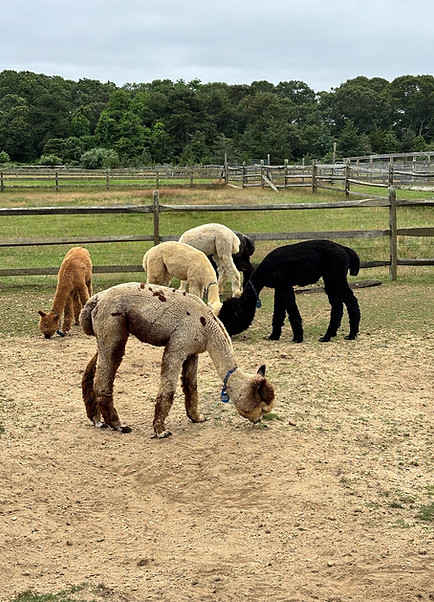
House only the number of animals per enclosure that allows free and independent movement of each animal when not at work with a human, as well as the ability to exercise each day. Physical location and conditions (i.e., terrain, vegetation, availability of pasture, etc.), as well as herd composition (males, weanlings, females, etc.) will dictate the appropriate number of animals that can live within a defined area. As a general rule of thumb, an area of 15 square feet per alpaca would be a minimum.
06
Alpacas are browsing and grazing animals. Where possible, provide them the opportunity to browse and graze daily.
07
In temporary situations such as at shows, or in case of health problems, alpacas may be kept in small spaces for a limited period of time. For longer periods (e.g., animals that are in quarantine), they should be exercised each day.
Social Environment

01
Alpacas need to live in association with other herd animals, preferably at least one other alpaca. Without appropriate companionship, most will fail to thrive. Therefore, it is recommended that alpacas never live alone. An alpaca should not be raised as a single baby away from any other camelids.
02
Alpha or highly territorial males may need to be corralled separately, but should be within sight of other alpacas.
03
Crias should remain with their dams until at least four months of age. (Six months or seventy pounds is recommended to promote normal behavior and to assure good nutrition (allow for maturation of the fore-stomach)). When deprived of this herd environment during their growth and development, they can develop severely abnormal ways of relating to humans at sexual maturity or earlier.
04
Crias should never be sold as pets to be intentionally bottle-fed. Bottle-feeding should take place in a herd environment and only when medically necessary to ensure the health of the dam and/or the cria.
Routine Husbandry
Toenail Trimming
Trim toenails if growth threatens lameness or compromises soundness. Alpaca's toenails grow continuously throughout their lives. Alpacas that reside in hard rocky ground in the mountains of Peru, Chili and Bolivia will naturally wear their toenails short. Alpacas in North America generally are more sedentary and have less area to exercise, or live on soft ground. As a result their toenails tend to grow longer. Long toenails may curve causing the toe to twist. This will pinch the pad and eventually it will break off painfully. This will cause lameness, and in order to avoid such problems, toenail trimming should be a part of routine care. Start at the back edges of each nail and work forward towards the point. Be careful not to cut in the edge of the pad since cuts will bleed and expose the Alpaca to the risk of infection. If you are a beginner, be conservative and leave more toenail as a margin for error. As you become more experienced you will find it very easy to trim your Alpaca's nails short without hurting them. When trimming the inside of the toenail, it helps to spread the toes apart with you fingers to allow more space for your nail clippers. Once you have trimmed both sides of the nail, remove the point with one final cut perpendicular to the line of the nail. Long curved nails may cause the Alpaca's entire toe to twist uncomfortably. One trimming may not be enough to allow the toe and nail to grow straight. It will be important to trim this animal's nails regularly, at least once a month until the toes and the nails remain straight. When the edge of a toenail has folded under to press on the pad, do not try to simply unfold it and cut it off. Trim the surrounding nail; gently unfold the folded part of the nail as far as possible without causing the nail to break off. Trim the nail back with several cuts in order to avoid cutting into the quick. Trim this toenail every 2 to 3 weeks until it returns to normal. If you accidentally cut into the quick and cause some bleeding, finish trimming the nail, then if it has not stopped bleeding, apply direct pressure to the area until it does. Pouring some 7% Iodine over the area will also help to stop the bleeding and will act as a disinfectant. Watch the Alpaca over the next few days in case an infection or lameness develops.
Feet
Alpacas seldom have problems associated with their feet. Alpacas normally walk on their middle and distal (furthest out) bones in their feet, called phalanges. These are anatomically equivalent to the bones of the middle part and tip of our fingers. The toenail surrounds and protrudes from the tip of each distal phalanx. The pad on the bottom of the foot resembles a dog's footpad, but is much tougher. Lameness or limping is an indication of pain or mechanical problems in an Alpaca's legs. Among the most common causes of lameness are foot problems. Either the nails are too long or damaged, or bruises, cracks, cuts, or infection of footpad. Other causes may be ankle sprain or an injury higher up the leg.
Teeth Trimming
An alpacas teeth grow continuously for about the first eight years of the alpacas life, then the growth does slow down considerably. Ideally the two front bottom teeth should be lined up just under the dental pad. Not a frequent occurance, but when we see the teeth start to grow towards the end of the pad we will trim them back. If the teeth happen to grow over they could be forced forward and the angle could change. They could be cut back at this point but they may never grow straight again due to the angle of the teeth. This is not to say that you should not trim those teeth back, even though they will not be perfect, your alpaca will look better and most importantly have the ability to eat and graze normally.
Novice Handler Syndrome
This syndrome is a long recognized condition where an over-handled or bottle-fed cria accepts people as its herd and then fulfills his natural desire to dominate the herd and become physically intimidating. It particularly applies to males but female alpacas can become disrespectful and difficult too. Clucking and spitting are the more likely outcome but occasionally females also are physically menacing. Extreme behavior is often caused by the way the alpaca is handled as a cria, and for this reason can be referred to as “Novice Handler Syndrome”. Prevention is easier than cure! One very important facet of the “Novice Handler Syndrome” previously known as “Bazerk Alpaca Syndrome” is the tendency of people to misinterpret the beginnings of aggressive behavior for friendliness. Young alpaca babies that rub, lean, stand closely, or walk right up and put their nose in your face or crotch and fail to yield space when you move toward them are not being friendly. These behaviors are the beginnings of aggression – the alpaca is checking out the boundaries of behavior to see what is allowed. If you do nothing to discourage this seemingly “friendly” behaviour it usually escalates and the alpaca can become completely unmanageable While there is nothing wrong with a young alpaca soliciting a greeting with neck and nose extended and then waiting politely for you to lean forward to participate in the greeting, sticking his nose in your face any time he feels like it is crossing the line of allowable behavior. Be clear about the fact that you have a personal space and he is not allowed in it. A human need only stop an animal from entering this space; we do not need to chase him away. Tell the alpaca what you want him to do: “STAY BACK”. However, remember to be a teacher rather than a boss and don’t participate in dominance contests with your alpacas (“I will show this animal who is the boss” attitude). Treat males and female babies the same – insist on respectful behavior from both sexes but avoid confrontation. If you are bottle feeding you need to ensure the cria remains in the herd even if he is motherless, and that he is handled to an absolute minimum – feed him and walk away! Cria (alpaca babies) do best if they have other babies to play with. With other babies around in many cases, the whole problem becomes a non-issue. The best alpacas are those raised by older alpacas who are well treated and correctly handled.
Physical Assessment
Hands-on physical assessment of each animal should be done regularly, at least twice a year. This should include weighing and/or body scoring (See Fig. A), mucous membrane color check (inner eyelid or gums), condition of incisors, and fiber coat evaluation. Weight loss, body score changes, pale color, listlessness or clumped stool should be cause for a more detailed health assessment such as fecal analysis, veterinary exam, and blood analysis. Excess weight gain should prompt a review of diet and activity.
Body Condition Scoring (BCS):
For alpacas, BCS should be done by firm palpation of spine and ribs. Fiber can distort body contour and be misleading. Only by hands on BCS can one determine if the animal is fit, fat or thin. Values based on a scale of 1-10, or 1 to 5, palpate backbone in mid-back & ribs behind forearm.

Fiber: Preparing for Fiber Harvest
As Alpaca Fiber becomes a larger part of each farm's business plan, it is important that more thought and attention goes into harvesting each years fiber crop to ensure maximum value and usability throughout the value-add chain. Shearing Day can be the most important day of the year on an alpaca farm.
If you do not do your shearing yourself, it is important to talk with the shearer before hand to make sure they know you process the fiber each year and are looking to maximize the value of the harvested fiber. Second Cuts are the enemy of processors everywhere. You want a uniform staple length throughout the blanket and as consistent as possible throughout the rest of the animal. Have your shearers focus on getting usable fiber off the animal first, and once it is separated have them go back and tidy up the animal.


Vegetable Matter
Vegetable matter and other foreign objects have a tendency to lock into fiber, especially crias, and it becomes quite a chore for sorters to work through a fleece if it is highly contaminated. Sorting on a commercial scale boils down to efficiency and accuracy and the system breaks down quickly if sorters are tied up working on trouble fleeces. To help prevent this clean paddocks and pastures of loose hay and bedding. Also clean barns of winter bedding and sweep daily. Keeping the barn and paddocks clean one month prior to shearing will reduce the vegetable matter greatly at shearing time. It also helps to feed alpacas close to ground level in the days leading up to shearing day, whether it be in a trough or low hay racks. This will prevent hay catching in the nap of the neck.
Colors
Most farms start off with their lightest animals and shear from light to dark to ensure the fiber collections for each animal do not become color contaminated. Have plastic bags pre-labeled with specific animal and grade ready to catch each grade of fiber as it comes off the animal. It is also helpful at this time to be skirting away armpit and chest guard hair before bagging up your fiber as it becomes a chore to go through and do this after the fact. Between colors, thoroughly clean the area of excess fiber to prevent cross contamination.
Cleanliness
If you are keeping your animals on dry lot while they wait to be sheared, spray the area down to cut down on dust and to prevent them from rolling around on the ground and picking up a ton of extra dirt in their fleeces. Many use a dry vac or blower on their animals to clean as much dirt and debris off them as possible which helps while processing, as well as saving unneeded wear and tear on your combs and cutters. If you are shearing on the ground, put down a tarp large enough to catch all the fiber as it comes off the animal so you are not picking it up off the ground.
Dry Fiber
In a perfect world, the sun will be shining for two full weeks prior to shearing day/weekend but as alpaca farmers know all to well, the weather does not always cooperate. Before bagging up your fiber to store and or ship in to be processed, it is very important the fiber is completely dry to prevent mold damage which will rot the fiber, causing it to become brittle and useless in commercial manufacturing. If your animals are not 100% dry, make sure to let the fiber dry out properly before bagging it up.
By cutting down on second cuts, vegetable matter, excess dirt, color contamination, armpit and chest guard hair, and keeping your fiber dry you will be making the very most for this year's upcoming fiber harvest. The next steps are to get that fiber out of your barns, basements, college bound children's old bedrooms, and into the supply chain. Check your local fiber cooperatives - they are more than happy to receive your fiber right after shearing season to get it into the manufacturing chain. This will ensure the fiber gets put to use right away, when it is freshest and least susceptible to contamination or moth damage, returning the most value per pound processed.
Vaccinations
The following is provided as information only. *
Source of info: Washington State University, College of Vet Medicine
General Information
01
02
03
04
05
06
All vaccinations are off label in alpacas as the population of alpaca in North America is still very small, therefore effectiveness and safety are not guaranteed by the manufacturers. Consult with your veterinarian to determine an appropriate vaccination protocol.
Avoid modified-live vaccines in pregnant animals.
Vaccines may not completely prevent infections but often moderate the disease symptoms experienced by the animal.
Vaccinations should be used to complement not replace management techniques for disease prevention.
Individual animal response to a vaccine is variable and can be affected by many factors such as stress, immune status at time of vaccination, and proper storage and administration of the vaccine. A sick animal will not respond as well as a healthy animal. Vaccinate a week or two prior to a stressful event such as shipping or weaning.
Initial vaccinations generally require boosters to generate adequate protection due to the need to prime the immune system and the potential for interference from waning maternal colostral antibodies.
Commonly Used Vaccinations
CD&T
Clostridium perfringens type C, D, and C. tetani A commonly used vaccine. C. perfringens has been implicated in diarrhea and sudden deaths in crias and occasionally adults. All animals are at risk for tetanus following infection primarily through wounds, castrations, etc. Schedule: One common vaccination schedule is vaccination of adults yearly; pregnant females 4-6 weeks prior to parturition; crias at 3-4 months old and again 4 weeks later then yearly thereafter. Other protocols are also used and can be tailored to suit individual farm situations.
Clostridium Perfringens Type A Toxoid
A recently developed vaccine for use in cattle - Evaluated at WSU VTH on alpacas - No vaccine site reactions were seen. - This product was NOT evaluated on pregnant animals. - Titers were measured and results indicated an immune response occurred but the degree of protection provided is unknown at this time.
Other Clostridial Vaccines
Vaccinates against a broad spectrum of clostridial bacteria. - Some contain tetanus. - Vaccine site reactions have been reported with some products. - 7-way and 8-way clostridial vaccines available. The number refers to the number of diseases the vaccine prevents.
Commonly Used Antibiotic
Naxcel
Naxcel Sterile Powder (ceftiofur sodium) is use for treatment of respiratory disease or pneumonia associated with Mannheimia spp. (Pasteurella haemolytica), Pasteurella multocida and Haemophilus somnus. Naxcel is also indicated for treatment of foot rot, pododermatitis associated with Fusobacterium necrophorum and Bacteroides melaninogenicus. Spectrum - Naxcel is a broad spectrum cephalosporin antibiotic active against gram-positive and gram-negative bacteria, including beta-lactamase-producing strains. It has also been demonstrated against E. coli, Salmonella spp., Streptococcus spp., Moraxella bovis and Actinomyces pyogen. Absorbtion - It is absorbed within 1-4 hours after injection. Dosage - The recommended dosage is 0.1 to 1.0 mg/lb of body weight (1 to 2 mL reconstituted sterile solution per 100 lb body weight) - or .35 cc per 20 lbs. Treatment should be repeated at 24-hour intervals for a total of 3 consecutive days. Additional treatments may be administered on days 4 and 5 for animals that do not show a satisfactory response (not recovered) after the initial three treatments. Selection of treatment duration should be based on the practitioner's judgment of severity of disease (i.e., for respiratory disease, extent of elevated body temperature, depressed physical appearance, increased respiratory rate, coughing and/or loss of appetite; and for foot rot, extent of swelling, lesion and severity of lameness). Storage - The unreconstituted powder requires no refrigeration; after reconstitution, the product must be refrigerated. Potency - Reconstituted Naxcel solution can be stored for up to 7 days in a refrigerator or 12 hours at room temperature. Reconstituted Naxel can be frozen for future use for up to 8 weeks. Avoid usage in young cria up to 4 months.
Regional or Situational Vaccines:
West Nile Virus
Alpacas are considered at low risk of developing clinical signs after infection with this virus. However the most common signs of infection are neurological usually progressing to death of the animal even with intensive medical treatments. Only consider use in areas with known West Nile virus. Adverse reactions to the vaccine have ranged from mild injection site reactions to anaphylaxis. Try to avoid vaccinating breeding females within 60 days of breeding or 30 days of parturition. There are two vaccine products that have been used in alpacas: Ft. Dodge West Nile-Innovator - Research showed 3 doses, 3 weeks apart, generated the highest titer response. Challenge studies evaluating vaccine protection in camelids have not been performed. Merial Recombitek Equine WNV vaccine - No published research but the product has been evaluated on alpacas.
Rabies
There are currently no licensed vaccines for use in alpacas. Rabies has been reported in camelids. In the state of Massachusetts, the rabies vaccination is not required for alpacas at the time of this posting. Rabies vaccinations can only be performed by veterinarians. Consider yearly vaccinations in endemic areas which can be given as early as 3-6 months of age. Proof of vaccination may not be sufficient if an animal is exposed leading to quarantine or euthanasia.
Leptospirosis (Lepto):
Consider in areas where the disease is endemic. May need to re-vaccinate up to 3-4 times a year. Clinical signs vary from fever and anorexia, kidney and liver damage, and abortions. There are many serovars or types of Leptospira. Vaccines only include the more common serovars found in cattle so protection may be incomplete. Prevention can be increased by limiting rodent and wildlife contact and vaccinating dogs that may have contact with the herd.
Equine Herpes Virus 1:
A disease has been infrequently reported in camelids. Infected animals exhibit neurological signs needed, use the killed vaccine product and vaccinate every 12 weeks.
Emergency Care
Alpaca Stomach Ulcers
Alpaca stomach ulcers are not uncommon. Ulcers can very easily lead to an alpaca death, so it is important to prevent this alpaca disease. Unfortunately, alpacas are stoic and it is hard to know that your alpaca is developing an ulcer until they are well advanced.
Death occurs because the ulcer has penetrated the stomach wall and stomach contents spill into the abdominal cavity causing peritonitis (infection). The alpaca’s condition rapidly deteriorates when this happens and the alpaca dies. Since we do not want to lose an alpaca, preventing ulcers is important. How do we do that? Let's begin with what causes alpaca stomach ulcers
- 01
- 02
- 03
- 04
“Bloat” is defined as tympany of the first stomach compartment. Bloat occurs when rumen gas production exceeds the rate of gas elimination. Gas then accumulates causing distention of the rumen. The skin on the left side of the animal behind the last rib may appear distended. Bloat can be a medical emergency, and timely intervention may be necessary to prevent death. Bloat is a common cause of sudden death in livestock. It usually results from nutritional causes.
Bloat in other ruminant species is usually classified as primary (frothy) or secondary (free-gas). Alpacas or llamas, grazing in the natural pastures of the Andean region never showed frothy bloat. Also, these animals have been observed to graze on alfalfa or clover pastures without bloating, and this would normally produce bloat in conventional ruminants. Cases of free-gas bloat do occur, albeit infrequently, probably due to toxic plants.
1. Frothy Bloat (pasture bloat)
Frothy bloat is usually associated with the consumption of legumous forages, but may also occur in sheep grazing lush cereal grain pastures or wet grass pastures or consuming grain that is too finely ground. Animals with frothy bloat can be treated with anti-foaming agents such as cooking oil or mineral oil or a commercial product such as Poloxalene.
2. Free Gas Bloat (feed lot bloat)
Free grass bloat is associated with grain feeding and occurs when animals were not given enough of an adjustment period. Many of the same factors causing acidosis are associated with free-gas bloat. Simple passage of a stomach tube may be effective at relieving free gas bloat. Inserting a trochar or needle into the abdomen is a life-saving procedure that should only be attempted as a last resort.
Anesthesia
Xylazine (0.1-0.2 mg/kg, IV) can be used for sedation without recumbency; higher dosages (0.3-0.4 mg/kg, IV) will result in recumbency and provide a light plane of anesthesia for 20-30 min. Xylazine (0.25 mg/kg, IV, or 0.35 mg/kg, IM) followed by ketamine (3-5 mg/kg, IV, or 5-8 mg/kg, IM) 15 min later will provide 30-60 min of restraint. Simultaneous administration of xylazine (0.4 mg/kg, IM) and ketamine (4.0 mg/kg, IM) will usually provide 15-20 min of restraint. Butorphanol (0.1-0.2 mg/kg, IM) can provide sedation of short duration.
Alpacas tolerate general anesthesia well and usually do not require tranquilization before induction. Premedication with atropine (0.02 mg/kg, IV, or 0.04 mg/kg, IM) will prevent bradyarrhythmias and decrease salivary secretions. Induction and maintenance of anesthesia are similar to that in other domestic species.
Parasite Management
What is a Parasite?
A parasite is an organism that grows, feeds, and is sheltered on or in another type of organism while contributing nothing to the survival of its host. In this instance, the host is our alpacas although all other livestock become the hosts for parasites too. There are two classifications of parasites that affect our alpacas. The first one is Internal parasites, parasites that live and feed inside the alpacas body. These are most often different varieties of worms that live and multiply in the small intestine or the stomach of the alpaca. The second classification is External parasites, those that live and feed off the outside of the alpacas body. Some examples of external parasites are ticks, flies, mosquitoes, lice, and mites.
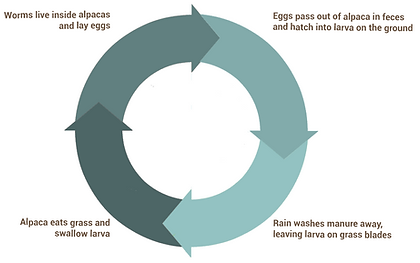
The Life Cycle of Parasites:
Without proper management, the internal parasites become a constant cycle. The worms live inside the alpaca getting nutrition from the alpaca's body. When the worms are adult, they lay eggs. The eggs get passed out of the alpaca in their feces, or manure, and end up in the pasture. Then the eggs either hatch into larva in the manure or on the ground. Rain then washes the manure off of the larva and the larva is left to live on the blades of grass. Then alpaca may swallow the larva while grazing. Once inside the nice environment of a warm alpaca, the eggs and larva will mature into adults in about three weeks. These adults now lay more eggs and the cycle starts all over again. So if the alpaca owner does not practice good de-worming herd management, the animals will eventually have a very heavy load of adult parasites. Carrying a heavy load of internal parasites also means a alpaca is getting only partial value from his food.
What about the alpacas that are wild in the mountains of South America and don't have owners to de-worm them? Why don't they get sickly from parasites? Alpacas that are out in the wild travel a large area while grazing and browsing. So, since they are moving from area to area, most of the time they are in new, clean grasses that do not contain eggs and larvae so they are not ingesting eggs. Our alpaca herds here are often in smaller confined areas and if there are too many alpacas for the area (over crowded pastures), then the chance of having parasites is much greater.
Breeding
Terminology:
Hand Breeding: One male, one female, breeding takes place, and the male is then separated this is the most common method at most farms.
Pen breeding: One male, one female, leaving them together for a defined period of amount of time.
Pasture breeding: One male, multiple females.
The simple act of breeding can have a major impact to an alpaca female uterus. Generally, it repairs itself after a period of time, 7-20 days. The uterus requires a certain amount of time to heal itself after a birth and regain a normal non-pregnant shape. This is the reason why many breeders choose to wait nearly three weeks before rebreeding. Studies have shown that this is common in open alpaca ranges of Peru. Repeatable breedings at short intervals or unnecessary breedings can do irreparable damage to a female. This action has the effect of shortening the breeding life of a female. The goal is to breed females, keeping the damage to her uterus minimal. To do this requires a good understanding of a female's cycle and her receptiveness to a male.

The Cycle:
Each of the two ovaries of an alpaca produce follicles on a regular cycle that equals 11-1/2 days from beginning of growth to its demise. Each ovary cycle is complementary of the other. This cycle for each ovary is depicted on the accompanying chart using the sine waves as a method of showing the growth and disintegration of each follicle of each ovary. Since we have a 11-1/2 day cycle for each ovary, the combined breeding cycle of both horns is 5.75 days. So each 5.75 days the female will become produce a follicle. The prime breeding time is approximately 3 days on the approach to the top or at the top of each cycle for each ovary as indicated in red and blue. (see PDF of chart here).
This information is made available from Dr. Walter Bravo, DVM. (Reference: The Reproductive Process of South American Camelids' by P. Walter Bravo (ISBN 0-9719073-0-7). The book is out of print, but copies may be found out there!)

Alpaca female receptiveness to a male will vary depending upon where she is in her specific cycle. She may run around a pen and spit but eventually sit down and be bred by the male regardless where she in her cycle, but unless she is bred in the period near the top of an ovary cycle, she will not get pregnant.
In a perfect world a female at the prime breeding time in her cycle will sit down immediately for a male, but the world is not perfect and most female alpacas can't read the manuals. Some females are not very receptive to a male's approach even when she is at her peak breeding time. These females are difficult to determine their cycle and may cause multiple breedings to get them pregnant. Using the following methods you can determine when your experienced female is receptive or going to be receptive without breeding. It can also be used in a limited manner on maidens as well, I will explain later.
Of course, there are other factors, that cause a female to be infertile. However, even in those medically challenged females this method will tell you sooner, with less damage to her uterus, if you have a problem.
Once the female has been bred the first time (as either a maiden or the first time after giving birth) her natural cycle is interrupted and the chart can no longer be used to accurately predict her ovulation cycle.
Breeding Schedules-Experienced Females
- 01
- 02
- 03
- 04
Disease Resistance
Although disease resistance is not an adaptive characteristic to high and semi-desert environments, we will discuss this advantage.
01
Foot and Mouth Disease: Few clinically important viral disease have been reported. Researchers over the world have reported a few positive serologic test results, indicating exposure to viruses, but no evidence of clinical disease has been presented. Foot and Mouth Disease has been reported as an experimentally induced disease in South American Camelids with very slight symptoms.
The species are relatively resistant to infection by the virus. They could be involved in transmission of the virus (for a very short period, after being artificially infected), rather than a clinical disease presentation.
02
Sheep Pulmonary Adenomatosis: One of the major economic problems in the Peruvian sheep industry is the so called "Sheep Pulmonary Adenomatosis" (or ovine pulmonary carcinoma). Alpacas or llamas are immune to this disease. This disease is caused by a virus that produces an ultimately fatal lung tumor, which was been experimentally transmitted to lambs. This chronic, progressive and ultimately fatal disease is untreatable.
Pulmonary adenomatosis in sheep frequently co-exist with ovine progressive pneumonia. Culling effected animals is, as yet, the only way to flight both diseases.
03
Foot-rot: South American Camelids are resistant to foot-rot, by far the most common disease in sheep. It is highly contagious, particularly during the rainy season, Alpacas are animals that like to graze in the "bofedales" (Bofedales are areas with constant moisture underground, retaining a fresh green color during the dry season). Footrot has never been reported in the alpaca and it is very rare in llamas that like to graze in drier areas.
04
Copper Deficiency: They are resistant to copper deficiency: no case of "swayback" has been observed in camelids.
05
Epididymitis: This is a testicular inflammation found in a variety of domestic male animals, especially in sheep, and causing ram infertility and abortion in pregnant ewes. This disease is mainly caused by Brucella ovis. Not a singly case of epididymitis has been reported in alpacas, except in cases of traumatic injury to the scrotal content.


As a corollary, it should be mentioned that in the late 1970s, the United Nations Food and Agricultural Organization defined the ideal animal for the future. The animal should be, said FAO, a ruminant; it should need little water; it should be highly fertile; and it should provide people with protein and other products. The alpaca and llama fit the ideal. To find an animal of the future, people need look no further than the camelids.
*JULIO SUMAR-KALINOWSKY, Retired Principal Professor, Head of the Camelids Section and Laboratories at the High Altitude Research Station "La Raya", IVITA, San Marcos University, Lima, Peru. Leading International Alpaca judge.
Passive Immunity Transfer and Plasma Transfusions for Alpaca Crias
This section was written to help alpaca owners gain a better understanding of the passive immunity transfer process, what can be managed to help insure the transfer is taking place, and what to do if failure of passive immunity transfer is noted. Procedures in this article are written in layman’s terms to help alpaca owners better understand the process. Only qualified veterinarians should conduct activities such as blood draws and plasma transfusions.
Septicemia is a major cause of alpaca cria deaths in the first few months of life. It is defined as the invasion of the blood stream by virulent microorganisms from a local seat of infection.
Passive Immunity in Newborn Alpacas
Alpaca crias do not have antibodies from their mother at birth and do not have the ability to produce adequate amounts of IgG (immunoglobulin or antibodies) for the first six to twelve weeks of life to protect them from diseases. Instead, alpaca crias obtain their immunity to many diseases by drinking colostrum or “first mother’s milk,” which is absorbed in the intestines of the cria.
The thick, rich, yellowish milk that is the first milk produced by an alpaca dam after giving birth is called colostrum. The immunoglobulin (IgG) in the colostrum is absorbed through the cria’s intestinal wall before the protein is digested by the digestive system. The IgG is then circulated in the cria’s blood system. This is nature’s way of giving the cria the protection it needs from many diseases during the first few months of life. This process is called passive immunity transfer.
There are many reasons why the process may fail. Alpaca breeders can help insure that passive immunity transfer takes place by managing for success.